
Choosing the right knit fabric is one of the most important decisions in apparel development. The fabric construction influences how a garment stretches, drapes, feels against the skin, and retains its shape during regular use.
Among the most widely used knitted fabrics are single jersey, interlock, and rib. Although all three belong to the knit fabric family, their structures and performance characteristics differ significantly. For apparel brands, garment manufacturers, and sourcing professionals, understanding these differences helps prevent unsuitable material selections and improves product development decisions.
What Is Knit Fabric?
Knit fabric is produced by interlooping yarns rather than interlacing them at right angles, as in conventional woven fabric.
This looped construction generally gives knitted fabrics greater flexibility and stretch, making them suitable for products that require comfort and freedom of movement.
However, not all knitted fabrics behave the same way. Yarn composition, knitting structure, fabric weight, and finishing processes all influence the final properties.
Let’s examine three commonly used knit constructions.
1. Single Jersey Fabric: Lightweight and Versatile

Single jersey is one of the most familiar knitted fabric constructions in everyday clothing. It is typically produced using a single set of needles, creating a fabric with two visually different sides. The face generally shows fine vertical knit stitches, while the reverse displays a different loop structure.
Key characteristics
Generally lightweight and flexible
Soft and comfortable against the skin
Good drape, depending on yarn composition and GSM
Suitable for printing and various finishing applications
May curl at cut edges, particularly without stabilizing finishes
Common applications
Single jersey is frequently used for T-shirts, casual tops, lightweight dresses, loungewear, and selected sportswear products.
Cotton single jersey is popular for everyday clothing, while polyester and blended constructions are also used where specific performance, cost, or care characteristics are required.
When should buyers choose it?
Single jersey is a strong starting point when the garment requires softness, flexibility, and relatively lightweight construction without excessive bulk.
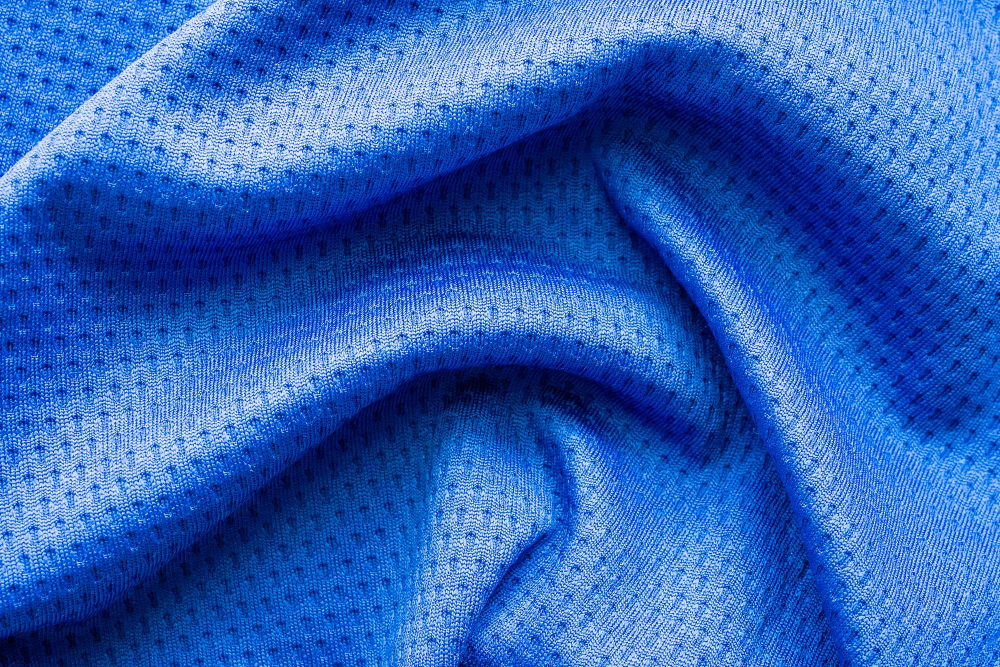
2. Interlock Fabric: Smoothness and Dimensional Stability

Interlock is a type of double-knit fabric produced using interconnected knitting structures. Unlike single jersey, interlock generally has a similar appearance on both sides and offers a more substantial, balanced construction.
Key characteristics
Smooth appearance on both surfaces
Generally more stable than comparable single-jersey constructions
Good surface uniformity
Comfortable stretch with a structured feel
Often reduced edge curling compared with single jersey
Common applications
Interlock fabric is used in premium T-shirts, children’s clothing, dresses, casualwear, loungewear, and selected sportswear garments.
It is particularly useful where a smoother appearance and better shape retention are important.
When should buyers choose it?
Consider interlock when the garment requires a more substantial hand feel, balanced stretch, and a cleaner silhouette.
Actual performance will still depend on the fiber blend, fabric density, and finishing.
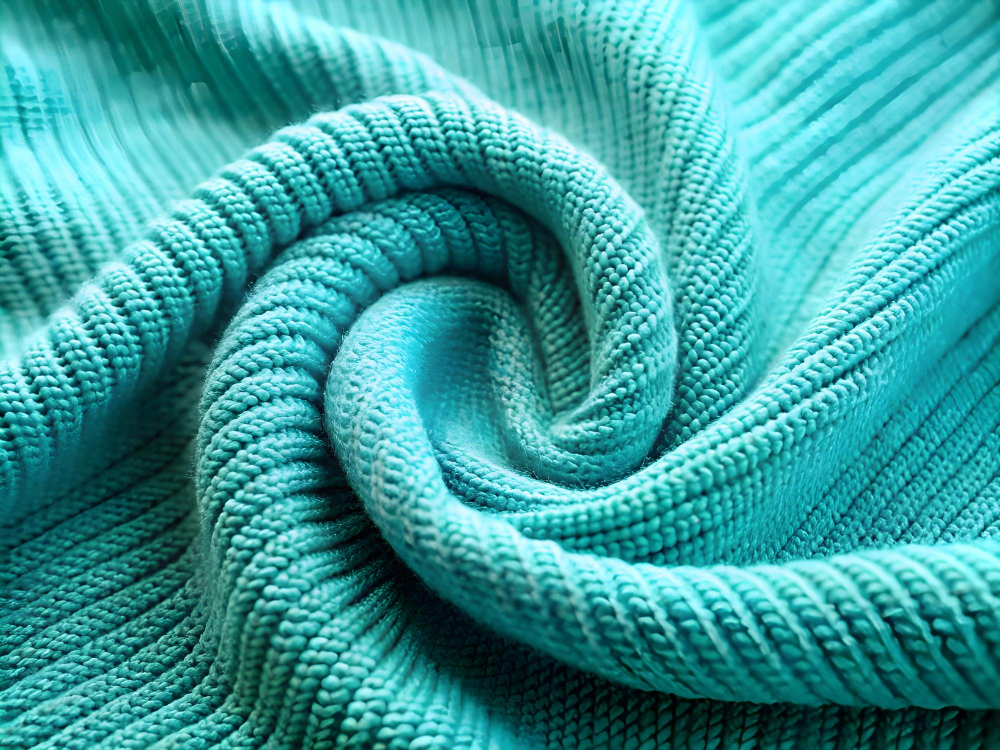
3. Rib Knit Fabric: Stretch and Recovery

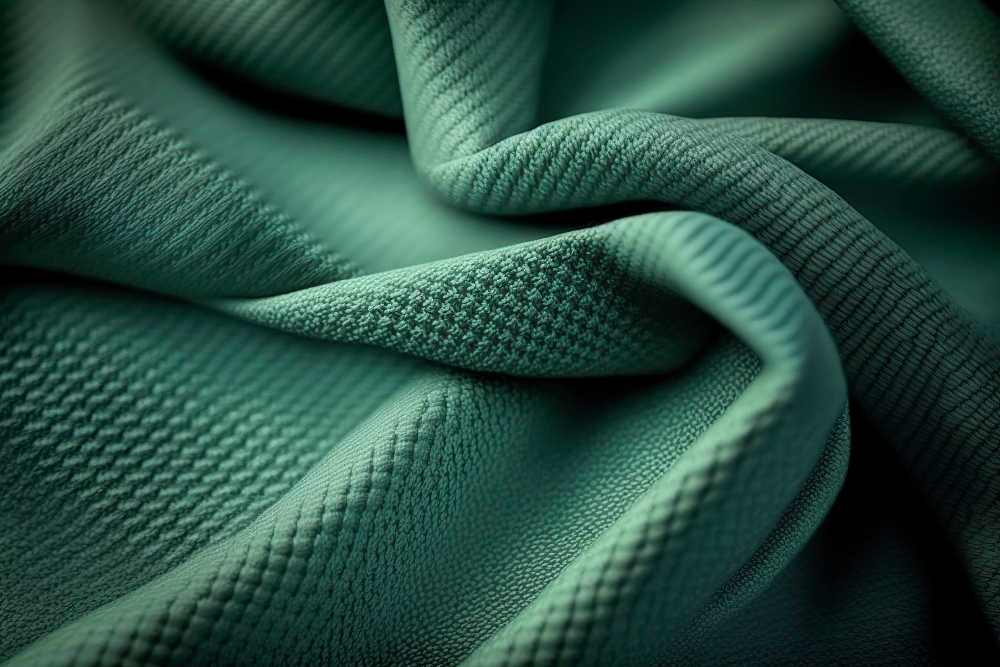
Rib knit fabric is identified by its alternating vertical columns of knit and purl stitches. Common constructions include 1×1 rib and 2×2 rib, although many variations are available. Its structure allows rib fabric to expand across its width, making it especially useful for areas of garments that need flexibility.
Key characteristics
Distinctive raised vertical texture
High widthwise stretch in many constructions
Good recovery when appropriately engineered
Comfortable fit around the body
Useful for both garment panels and trims
Common applications
Rib fabrics are widely used in neckbands, cuffs, waistbands, fitted tops, tank tops, and body-hugging garments.
Blending rib fabric with elastane can improve stretch recovery, although the result depends on the construction and elastane content.
Single Jersey vs Interlock vs Rib: Quick Comparison
| Feature | Single Jersey | Interlock | Rib |
|---|---|---|---|
| Construction | Single knit | Double knit | Alternating knit/purl columns |
| Appearance | Different face and reverse | Similar on both sides | Vertical ribbed texture |
| Stretch | Moderate to high | Generally balanced | Often high widthwise stretch |
| Structure | Usually soft and fluid | More stable and substantial | Flexible and body-conforming |
| Typical uses | T-shirts, casualwear | Premium basics, loungewear | Cuffs, collars, fitted garments |
These are general construction characteristics, not guaranteed performance specifications.
Why Fabric Composition Matters Just as Much
Two fabrics with the same knitting structure may behave very differently.
For example, a cotton single jersey and a polyester-spandex single jersey can have different moisture-management properties, recovery, shrinkage behavior, and surface feel.
Likewise, an interlock made from cotton may offer a different drape and handle from one made with polyester or viscose blends.
Buyers should therefore evaluate construction and fiber composition together rather than treating fabric names as complete specifications.
What Should Buyers Check Before Ordering?
Before approving a knit fabric, review its intended application and request the relevant technical information. Important considerations include:
Composition: Cotton, polyester, viscose, elastane, or blended fibers
GSM: Fabric weight appropriate for the garment
Width: Usable width for cutting and production planning
Stretch and recovery: Particularly important for fitted garments
Dimensional stability: Shrinkage and shape changes after laundering
Colorfastness: Resistance to color change or transfer under relevant conditions
Surface quality: Pilling, spirality, and appearance after use or washing
A physical sample and appropriate testing are often necessary before bulk approval.
Conclusion: Choose Construction Based on the Garment
Single jersey, interlock, and rib fabrics each serve different purposes.
Single jersey offers versatile comfort and drape. Interlock provides a more balanced, structured surface. Rib is especially useful where stretch, fit, and recovery are priorities.
The best choice is not necessarily the thickest, softest, or most expensive fabric. It is the construction that meets the garment’s performance, appearance, and commercial requirements.


